Artikler
What are cleanroom HMIs, and how do they improve pharma process control?
arrow_backTo the overview16 July 2026 | Blue Line A/S
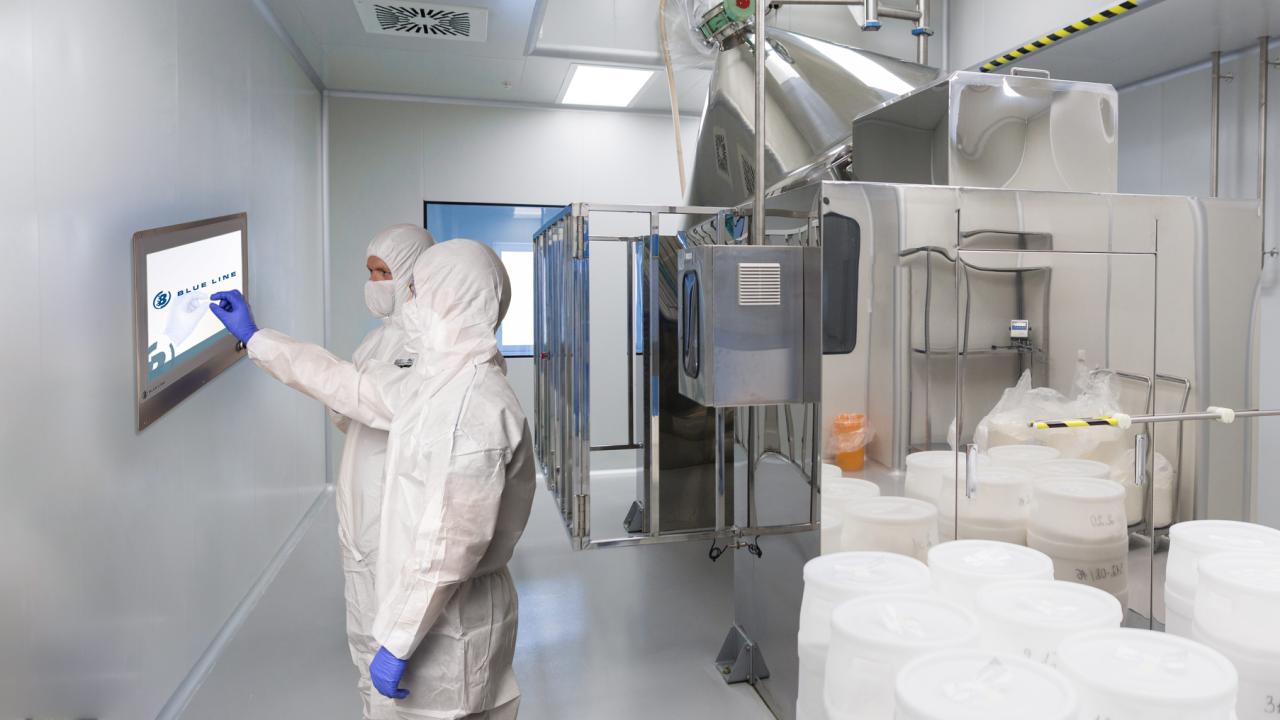
What are cleanroom HMIs, and how do they improve pharma process control?
If you work in pharmaceutical manufacturing, you are responsible for processes that must run within very strict limits. Temperature, pressure, flow, and quality parameters all need constant attention. To manage this effectively, you need a simple and reliable way to interact with your production systems. This is where a cleanroom HMI becomes essential.
A cleanroom HMI gives you visibility and control directly inside the cleanroom. It allows you to monitor processes, react to deviations, and make adjustments without leaving the controlled environment. In this article, you will learn what cleanroom HMIs are, how HMI monitors support your daily work, and why these systems are critical for process control, operator efficiency, and compliance.
What is a cleanroom HMI?
A cleanroom HMI is a Human Machine Interface designed specifically for pharmaceutical and life science environments. Unlike standard industrial screens, cleanroom HMIs are built to meet hygiene and regulatory requirements from the ground up.
When you use a cleanroom HMI, you can interact with your process directly at the point of operation. This reduces delays and lowers the risk of contamination caused by unnecessary movement in and out of the cleanroom.
A typical cleanroom HMI is designed with features that are not advanced extras. They are basic requirements if you want stable and compliant production.
Why cleanroom HMIs matter in pharma production
In pharmaceutical manufacturing, small issues can quickly become big problems. An HMI for cleanrooms helps you stay ahead of this.
With the right HMI setup, you can:
- Monitor critical process values in real time
- Detect deviations early
- React faster to alarms and warnings
- Reduce manual errors during operation
- Instead of reacting after a deviation has already affected product quality, you remain in control throughout the process.
HMI for cleanroom design and compliance explained simply
Compliance does not have to be complicated. A well-designed cleanroom HMI supports compliance instead of adding complexity.
Hygienic design you can rely on
HMIs from Blue Line use smooth stainless steel surfaces that withstand frequent cleaning and disinfection. There are no unnecessary gaps or edges where particles can collect.
This supports your cleaning procedures and helps you maintain the required cleanroom classification without extra effort.
Audit and validation support
When your HMI is designed for pharmaceutical use, it becomes easier to document and validate your processes.
Ask yourself this. Does your current HMI make audits easier, or does it raise questions you then have to explain?
How HMI monitors improve process control
An HMI monitor is your main visual interface to the production process. In a cleanroom, this monitor must be clear, reliable, and easy to use.
Real-time process visibility
An HMI monitor for cleanrooms shows you live data from machines and sensors. This can include:
- Temperature and pressure values
- Batch status and progress
- Alarm conditions
- System messages
Touch operation designed for gloves
You are always required to wear gloves in a cleanroom. A HMI for cleanrooms is designed with this reality in mind.
Modern touchscreens allow you to:
- Navigate menus accurately
- Enter data without delays
- Confirm alarms quickly
- This makes your work more intuitive and reduces the need for additional input devices that may compromise hygiene.
Built for continuous operation
Pharma production often runs around the clock. Cleanroom HMIs are typically designed for continuous operation using fanless cooling and -industrial components.
For you, this means:
- Higher system reliability
- Less unplanned downtime
- Lower maintenance requirements
How cleanroom HMIs integrate into your systems
HMIs are usually connected to SCADA or Manufacturing Execution Systems.
This allows you to:
- View process data directly
- Acknowledge alarms
- Execute predefined workflows
- When systems are well integrated, your daily work becomes simpler and more consistent.
When you need an ATEX HMI
Some pharmaceutical processes involve flammable substances or explosive dust. In these areas, standard equipment is not sufficient.
An ATEX HMI is designed for potentially explosive environments and allows you to:
- Monitor your process safely
- Control equipment in hazardous zones
- Maintain visibility without compromising safety
- This is especially relevant in areas such as solvent handling, weighing, and dispensing.
Improve operator efficiency with better interfaces
A clear interface reduces stress and mistakes. When screens are easy to understand, you work with more confidence and need less training.
Good HMI solutions also offer flexible mounting options, so the screen can be positioned correctly for the task at hand. This improves ergonomics and reduces physical strain during long shifts. If an interface feels difficult to use, it is not because you are doing something wrong. It is because the interface is poorly designed
Why HMIs for cleanrooms are a strategic decision
A HMI for cleanrooms is not just another screen. It directly affects how you control your process, stay compliant, and support your operators. Choosing the right HMI can make your production safer, more stable, and easier to manage every day.
With Blue Line, you get guidance to select the cleanroom HMIs that truly fit your needs. We help you choose:
Hygienic HMI monitors and touch panel PCs built for cleaning and durability
ATEX HMIs for safe operation in hazardous areas
Solutions designed for long-term reliability and seamless integration with your systems
The goal is to give you real control and confidence in your processes. The question is: “Are your HMIs helping you actively manage your process, or are they just background equipment?”




This article is written by:
Blue Line A/S
As industry leaders, Blue Line’s mission focuses on ensuring uninterrupted performance in environments where traditional IT solutions are not enough.
From standard products to customer-specific solution, we deliver critical hardware for the world’s most demanding environments. These products ensure continuous operation in conditions where high standards of reliability are needed.
Drawing on 40 years of expertise in the rugged IT sector, Blue Line’s solutions deliver positive results in customer sites worldwide and cover industries like pharmaceutical, defense, maritime, food production,
Responsibility for content on this site
Information, images, product descriptions, videos, certifications, sustainability claims, and other content on company profiles are uploaded and maintained by the individual exhibitors.
Exhibitors are solely responsible for ensuring that their content is accurate, properly documented, and legally compliant, including compliance with applicable regulations concerning marketing, sustainability claims, and intellectual property rights.
MCH A/S solely provides the platform and does not, as a general rule, verify the content.